Download the GoTyme Bank app
Switch to a beautiful banking experience today.
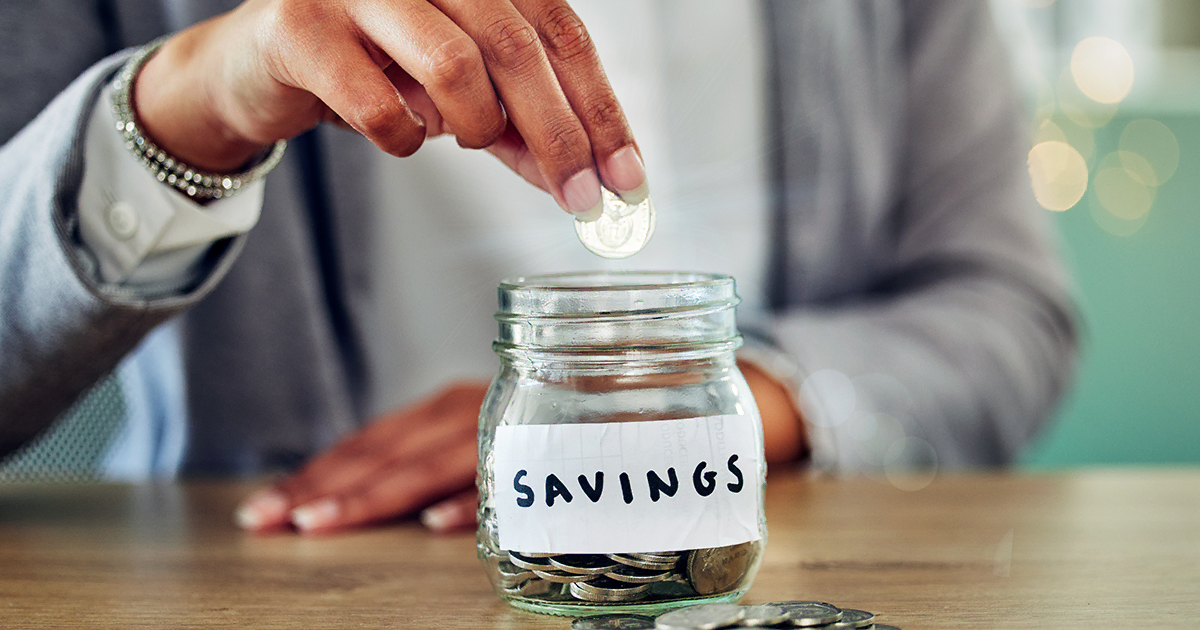
Results from the TymeBank Rainy Day Report, a just-released report based on an online survey of 1475 consumers (mostly TymeBank customers), indicate that a remarkable 83% of respondents say they are putting money away.
“The average salary of a young person is R12 000 or R144 000 a year. This must cover housing, food, transport, data and potentially assist family members. Insights from TymeBank’s depositor base tell us that among the 26 – 35-year cohort just under 40% are using a fixed deposit, along with 29% of those aged 16 – 25.
The fact that those under 35 are saving the most is extremely encouraging. Starting early can make a significant difference to the amount you accumulate, given the power of compound interest,” says Greg Illgner, Chief Strategy Officer at TymeBank.
Anecdotally the average amount TymeBank customers put into a fixed deposit is R10 000, while the largest amount to date is R4-million.
“What this tells us is that despite the economic headwinds, consumers are being diligent about saving what they can afford. South Africans are often said to be resilient in the face of adversity,” says Illgner.
Interestingly, the majority of TymeBank customers who are using fixed deposits are female (54%). This could be for several reasons:
When it comes to which financial products consumers use, 26% of respondents indicated they use a fixed deposit compared to 55% who make use of an accessible savings tool. A notice account is used by 10% of respondents, while fewer than 10% use other channels.
“The disciplined behaviour of those savers who choose to lock their money away for a fixed period to maximise the interest accrued shows how savvy consumers are when it comes to using different products for different purposes, even when they may be under financial pressure,” says Illgner.
Among the savers, almost a quarter (23%) of respondents consistently save a portion of their income each month, while 60% save whenever they have extra cash.
“The disciplined savers who set aside a regular percentage of their income every month (23%) deserve a shout-out for following the successful ‘pay yourself first’ savings strategy,” says Illgner.
“Building on this, once you accumulate a nice lump sum using a flexible savings tool like GoalSave, you can transfer it to a fixed deposit account, thus locking your funds away for a predetermined period, while earning a healthy amount of interest.
“Our advice is to save what you can, build it up and then put it away for a rainy day using a fixed deposit. Repeat. Start another savings pocket, build it up and put it away where it is safe, even from yourself. It’s a smart savings strategy for savvy consumers,” says Illgner.
Laura du Preez, editor of Smart About Money, a consumer financial education website linked to the Association of Savings and Investment South Africa (ASISA), agrees. “As South Africans we are often told we have a terrible savings rate, but many of us are saving, just possibly not enough.
“However, it is encouraging that savings pockets, aided by digital tools that help customers work out how they can achieve their goals, appear to be making a difference, especially among the digitally savvy under 35s.”
An overwhelming 44% of those polled said they are saving for emergencies, which is prudent. Education followed at 17%, everyday expenses at 16%, while 14% are saving for a large purchase like a car. Only 5% are saving for retirement.
“Having an emergency fund is key. It provides financial relief when life happens: the geyser bursts, you need sudden dental work, or your car needs new parts. These are realities that happen without warning. Having access to some money to pay for these types of circumstances is beneficial,” says Illgner.
Du Preez adds that when we have emergencies covered and goals on our radar, the next big shift in South African thinking needs to be long-term savings for our older selves. “Many people think they will never retire or need to, but not preparing for a time when life or ill health may change their thinking. The ability to choose how much you want to work in your later years is key to your financial security,” she says.
The poll also reveals that we tend to save at different times of the year. Most respondents (24%) said they started saving at the beginning of a new year, 14% save ahead of the holidays and interestingly 12% save during the winter months. “Let’s just say that these consumers are conscious of saving all year round and may be looking at the holiday season to have enough for that trip or other festive expenses,” says Illgner.
“In such challenging times, it is key to have a stash of cash saved for those rainy day emergencies. At the same time, it is wise to put money away for those big goals, not forgetting retirement,” says Illgner. “We know money does not go as far as it used to, which is even more reason to save. The more prepared you are, the better you will weather the storms while saving for the future.”